Sleet, freezing rain and hail compared
Updated
Sleet and freezing rain both begin as snow that meets a warm layer on the way down. A shallow warm layer melts only part of the snowflake, so the partly melted snow refreezes into bouncing sleet pellets, while a deeper warm layer melts the flake fully and the drops freeze on contact as clear glaze. Hail is layered ice that forms only inside thunderstorms.
Right now0Ice storm warnings in effectas of Snow totals by state, measured
WeatherTotals issues no alerts or warnings. Official warnings: weather.gov.
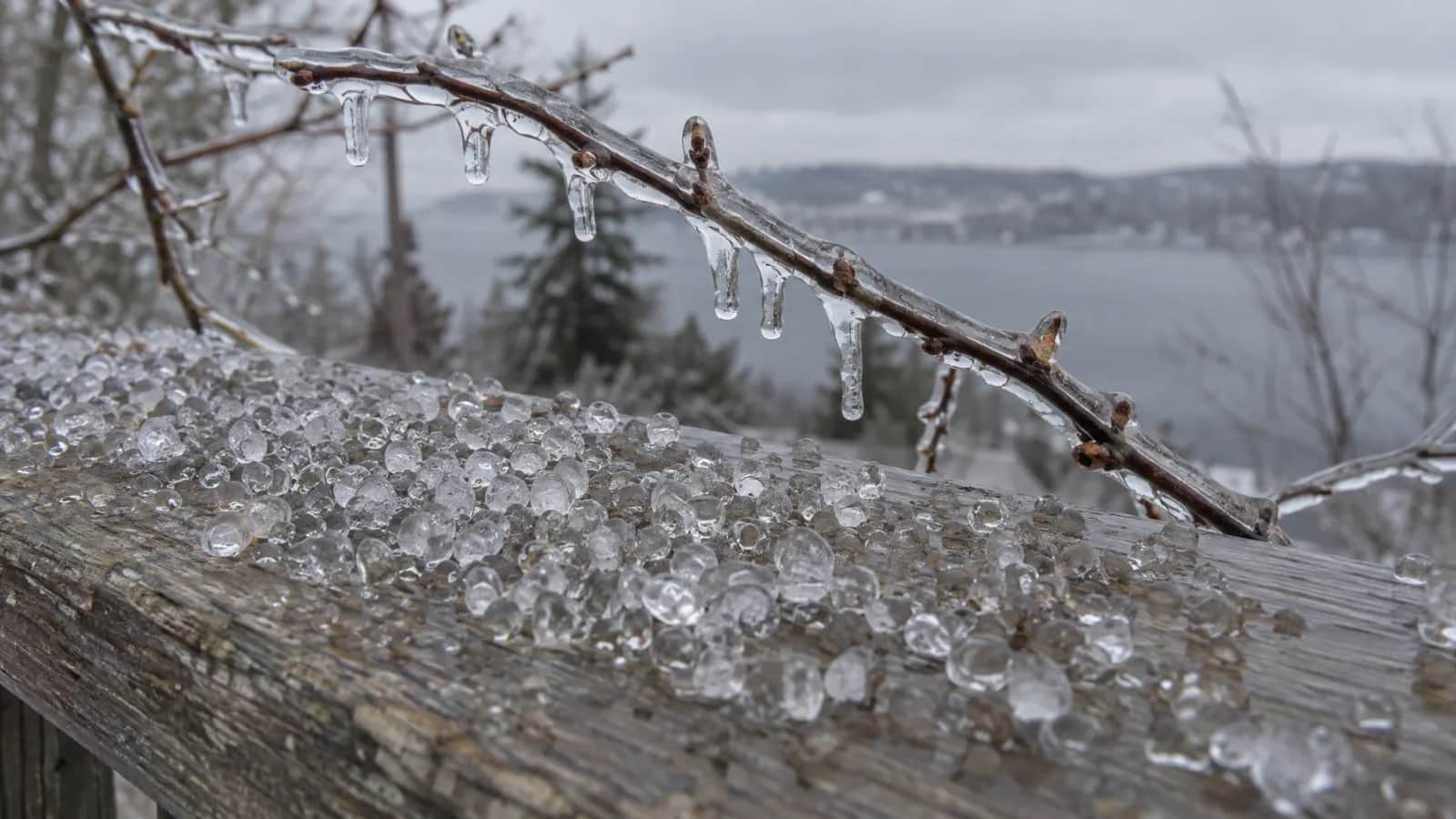
Side-by-side comparison
| Type | How it forms | What reaches the ground | Usual season | Alert that covers it |
|---|---|---|---|---|
| Sleet | Snow partly melts in a shallow warm layer, then refreezes while falling through deep cold air near the ground. | Frozen pellets that bounce and can pile up. | Winter, with summer sleet only in polar regions. | Heavy accumulation triggers a Winter Storm Warning; light amounts bring a Winter Weather Advisory. |
| Freezing rain | Snow melts fully in a warm layer, then drops cross a thin freezing layer too shallow to refreeze them. | Supercooled drops that freeze on contact with cold surfaces. | Winter, when a warm layer sits above cold air. | A glaze of a quarter inch or more earns an Ice Storm Warning; less than that is a Winter Weather Advisory. |
| Hail | Thunderstorm updrafts carry drops into very cold air; stones cycle and add ice layers until too heavy. | Layered ice stones, from pea size to very large. | Warm months, during thunderstorms. | Severe Thunderstorm Warning at quarter size, 1.00 inch, or larger. |
What separates sleet from freezing rain
The National Weather Service Northern Indiana office describes sleet and freezing rain as two outcomes of the same setup. Both begin as snow high in the cloud. Sleet forms when only part of the snowflake melts in a shallow warm layer, and the slush refreezes in deep cold air near the ground. Freezing rain forms when the snow melts fully, then passes through a cold layer too thin to refreeze the drops.
Freezing rain coats every cold surface with a clear layer of ice that adds weight and can bring down branches and wires. Sleet piles up as loose pellets that bounce and leave surfaces uncoated.
What separates sleet from hail
The National Weather Service JetStream describes hail as a thunderstorm product. Updrafts carry drops into very cold air, adding ice layers until the updraft cannot hold them. Sleet needs a winter setup with snow falling through layers above and below freezing, and it is largely a winter event, with summer sleet only in polar regions.
Hail starts at pea size, 0.25 inch. Quarter size, 1.00 inch, is the threshold for a Severe Thunderstorm Warning. The US record hailstone was 8.00 inches in Vivian, South Dakota, on July 23, 2010, per the National Weather Service.
Telling them apart when it is falling
- Sleet lands as pellets that bounce off hard surfaces.
- Freezing rain leaves a clear, smooth coating of ice on trees, cars and power lines.
- Hail falls as chunks of ice during a thunderstorm, often with thunder.
- Snow is flakes that stay frozen from cloud to surface.