Flash Flood Warning
Updated
A Flash Flood Warning means flash flooding is happening or about to happen. Local National Weather Service offices issue it for sudden, violent floods that can develop in minutes to hours. Move to high ground right away if you are in a flood-prone area. This is the fast-moving kind, unlike a Flood Warning for slower river rises.
Right now0Flash flood warnings in effectas of Every term in the storm glossary
WeatherTotals issues no alerts or warnings. Official warnings: weather.gov.
The four flood products
| Product | What it means | How fast it develops | What to do |
|---|---|---|---|
| Flash Flood Warning | Flash flooding is imminent or occurring. | Minutes to hours. | Move to high ground immediately if in a flood-prone area. |
| Flood Warning | Flooding is imminent or occurring, typically from slower river rises. | Hours to days. | Take action to protect life and property. |
| Flood Advisory | Flooding is possible but not expected to be severe enough for a warning. | Usually slow-moving or minor. | Stay aware; minor inconvenience is possible. |
| Flood Watch | Conditions are favorable for flooding, but flooding is not certain. | No set speed; it is about potential. | Stay alert and be ready to act if a warning is issued. |
Wettest single days by city
The wettest single day among measured cities is 22.75 inches of rain at Key West, Florida on Nov 11, 1980.
| city | one-day rainfall (inches) | date |
|---|---|---|
| Key West, FL | 22.75 | Nov 11, 1980 |
| Hilo, HI | 16.87 | Feb 20, 1979 |
| Houston, TX | 16.07 | Aug 27, 2017 |
| Pensacola, FL | 15.55 | Apr 29, 2014 |
| Honolulu, HI | 15.32 | Mar 5, 1958 |
| West Palm Beach, FL | 15.22 | Apr 17, 1942 |
| Miami, FL | 14.85 | Apr 25, 1979 |
| Islip, NY | 13.51 | Aug 13, 2014 |
| Wilmington, NC | 13.38 | Sep 15, 1999 |
| Mobile, AL | 13.36 | Apr 13, 1955 |
GHCN-Daily station records from NOAA NCEI, one station per city.
Under 17 U.S.C. 105, no copyright attaches to the government-produced figures on this page, including reports, alerts, station observations, and normals, which were created by the National Weather Service and other NOAA offices. The notice that 17 U.S.C. 403 requires appears in this sentence. It does not imply endorsement by or affiliation with those agencies. See: Data sources and attribution.
How little water it takes
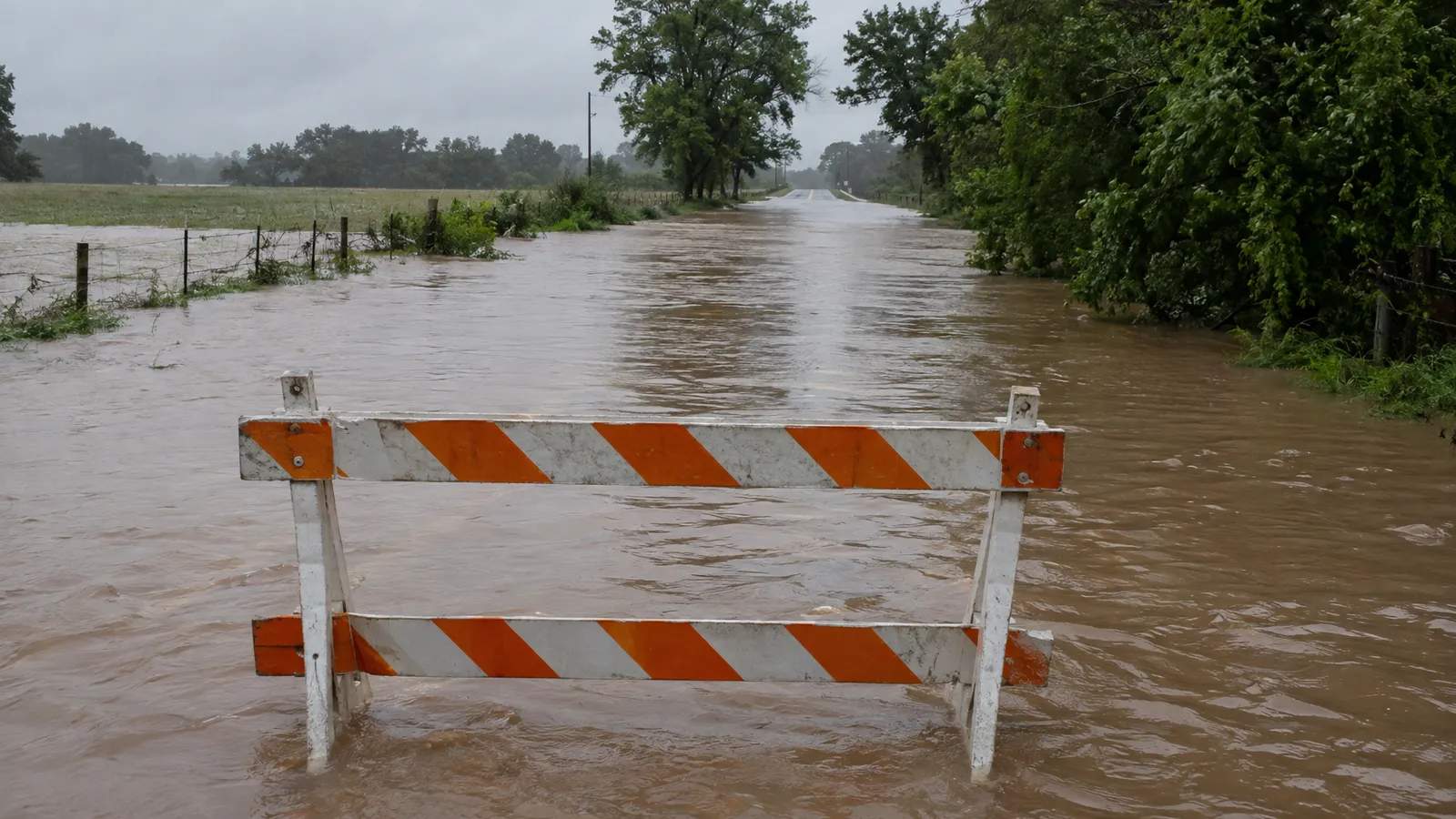
The National Weather Service's Turn Around Don't Drown campaign gives the numbers behind the danger. Six inches of fast-moving water can knock an adult off their feet. Most cars are carried away by twelve inches of rushing water, and two feet can sweep away SUVs and trucks.
What to do when one is issued
- Move to high ground immediately if you are in a flood-prone area.
- Never drive around a barricade.
- Do not walk or drive through moving water.
- Avoid driving into floodwater, since most flash flood deaths happen in vehicles.
- Be especially cautious at night, when water depth and road damage are invisible.