Snow squall
Updated
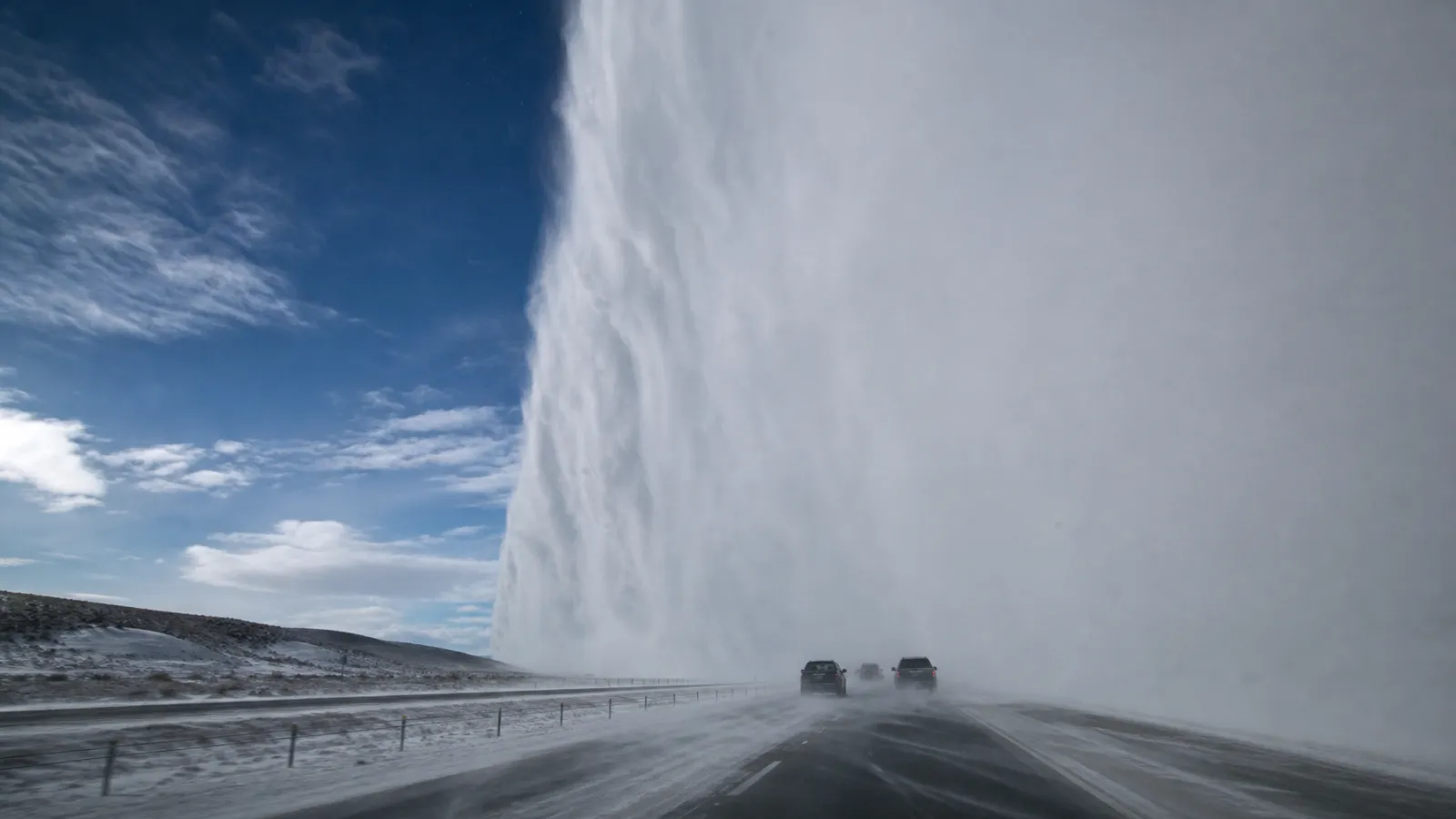
A snow squall is a short but intense burst of heavy snow and strong gusty wind. Visibility can drop to near zero in minutes. At a single location, the intense phase is over well before the hour mark, often far sooner. The National Weather Service issues a Snow Squall Warning for these events because they cause pileups on highways with little or no warning.
Right now0Snow squall warnings in effectas of Snow totals by state, measured
WeatherTotals issues no alerts or warnings. Official warnings: weather.gov.
Snow squall warning
The National Weather Service created the Snow Squall Warning for one specific danger: a whiteout that arrives on a clear day. Local offices issue it as a polygon, the same way they issue tornado and severe thunderstorm warnings. It lasts only as long as the squall is expected to pass through a spot.
- Issued as a polygon-shaped warning area, like for tornadoes and severe thunderstorms.
- The warning goes out when three things line up: snow and blowing snow cut visibility below 1/4 mile, surface temperatures are below freezing, and the worst of it is expected to pass within 60 minutes in one spot.
- In use at all National Weather Service offices since November 1, 2018.
- Since the 2023-24 winter, a Snow Squall Warning triggers a Wireless Emergency Alert only when it is tagged Significant. Earlier, every Snow Squall Warning did.
Snow squall vs blizzard vs winter storm
| Event | Duration | Visibility | Accumulation | What the warning covers |
|---|---|---|---|---|
| Snow squall | It lasts less than an hour in a single place, often much less. | Near zero in minutes | Little to none, up to 1 to 2 inches | Visibility for under an hour |
| Blizzard | 3 hours or more | Under 1/4 mile | Not a set amount; can be heavy or light | Blizzard Warning for sustained wind and visibility |
| Winter storm | Many hours | Not the primary criterion | Significant over many hours | Winter storm warning for total accumulation |
Driving into a snow squall
- Slow down before the squall reaches you, not when you are in the whiteout.
- Turn on your headlights.
- Increase your following distance to several car lengths.
- Do not brake hard on a cold road.
- Wait out the squall at the next exit, 15 to 30 minutes, rather than stopping on the roadway.